
How to Choose a Men’s Vitality Supplement Without Falling for Marketing Hype
The supplement aisle is full of bold promises and flashy packaging. This guide gives you the tools to see through the noise and make a genuinely informed choice.
In This Article
- Why Most Supplement Advice Cannot Be Trusted
- Step One — Read the Supplement Facts Panel, Not the Front Label
- Clinically Relevant Dosages vs. Pixie Dusting
- Third-Party Testing — What USP, NSF, and Others Actually Mean
- Red Flags That Should Make You Walk Away
- What Good Labeling Actually Looks Like
- How to Match a Supplement to Your Actual Needs
- Common Buying Mistakes Even Smart Men Make
- The Realistic Timeline — What to Expect and When
- A Decision Framework You Can Use Today
- Frequently Asked Questions
If you have ever searched for a men’s vitality supplement online, you know how overwhelming it is. Every product claims to be « the best. » Every brand has a list of benefits that reads like a wish list. And every review site seems to conveniently rank their affiliate partner as the top pick. It is exhausting — and it erodes trust.
Here is the reality: choosing a quality supplement is not complicated once you know what to look for. The problem is that the supplement industry has a vested interest in keeping you confused, because confused buyers are more likely to grab whatever has the most impressive marketing or the most five-star reviews.
At Dulson Sante, we would rather give you the tools to make a good decision — even if that means you look more critically at our own products. This article is a genuine decision framework: how to read labels, what dosages actually matter, which certifications to trust, and what red flags should make you put a product back on the shelf. If you want to browse our collection afterward with sharper eyes, even better.

Why Most Supplement Advice Cannot Be Trusted
ℹ️ Did You Know: Unlike prescription drugs, dietary supplements in the United States do not require FDA approval before they go to market. Under the Dietary Supplement Health and Education Act (DSHEA) of 1994, manufacturers are responsible for ensuring their products are safe — but the FDA only steps in after a problem is reported. This means the burden of quality assessment falls largely on you, the consumer.
Let us start by understanding why the information landscape is so polluted. There are three main sources of supplement advice, and each one has built-in conflicts of interest.
Affiliate review sites. The vast majority of « best supplements » articles you find through Google are affiliate content. The website earns a commission when you click through and buy. This does not mean every recommendation is bad, but it means the ranking is influenced by which products pay the highest affiliate commissions — not necessarily which products are best for you.
Brand-funded studies. Some supplement companies fund their own research. This is not inherently problematic — many legitimate studies are industry-funded. But when the company funding the study also stands to profit from a positive result, healthy skepticism is warranted. Look for studies published in peer-reviewed journals and replicated by independent researchers.
Social media influencers. Influencer endorsements are often paid partnerships, even when they are not clearly disclosed as such. An enthusiastic personal testimonial is not evidence — it is marketing. The FTC requires disclosure of material connections, but compliance is inconsistent.
The point here is not that all supplement advice is fraudulent. It is that you need a framework for evaluating information yourself, rather than trusting any single source. That is what the rest of this article provides.
Step One — Read the Supplement Facts Panel, Not the Front Label
The front of a supplement bottle is marketing. The Supplement Facts panel on the back is regulated information. That is where your evaluation should start.
Every supplement sold in the U.S. is required to include a Supplement Facts panel that lists every ingredient, its amount per serving, and the percent daily value (when applicable). This panel follows specific formatting rules mandated by the FDA, which makes it more reliable than whatever creative claims appear on the front.
Here is what to look for on the Supplement Facts panel:
Check the Serving Size
This is the first thing that catches people off guard. A product might advertise « 1500mg of ingredients per bottle » but require 3 capsules per serving, taken twice daily. That changes the cost equation significantly — and it means the per-capsule dosage of each ingredient may be much lower than the total suggests. Always calculate your actual daily cost based on serving size and servings per container.
Look for Individual Dosages
Each ingredient should have its own dosage listed in milligrams (or micrograms for some vitamins). If the label lists a « proprietary blend » with a total weight but no individual dosages — that is a deliberate choice by the manufacturer to obscure information. We will talk more about why this matters in the next section.
Note the Form of Each Ingredient
The form in which an ingredient is provided significantly affects how well your body can absorb and use it. Zinc picolinate is generally better absorbed than zinc oxide. Magnesium glycinate is better tolerated than magnesium oxide. Ashwagandha KSM-66 has a stronger research backing than generic ashwagandha powder. These details should be specified on the label.
Check for Unnecessary Fillers
The « Other Ingredients » section lists everything that is not an active ingredient — capsule material, fillers, flow agents, colorants. Some are standard and harmless (vegetable cellulose for capsules, rice flour as a filler). Others raise questions — artificial colors, titanium dioxide, excessive sugar in gummy formats. Fewer unnecessary additives is generally better.
This might sound like a lot of work, but it takes about 30 seconds once you know what you are looking at. And that 30 seconds is the difference between making an informed choice and falling for packaging design.
Clinically Relevant Dosages vs. Pixie Dusting
« Pixie dusting » is an industry term for including an ingredient at a dose far too small to produce the effect it was included for. The ingredient gets listed on the label — which makes the marketing copy technically accurate — but the amount is meaningless from a physiological standpoint.
Here is why this matters in practice. Suppose a supplement includes ashwagandha because research shows it may support cortisol reduction and vitality. The studies showing these effects typically use 300-600mg per day of a standardized extract. If a product includes 50mg of generic ashwagandha powder buried in a proprietary blend, you are getting the ingredient’s name on the label without a meaningful amount in the formula.
This is one of the most widespread practices in the supplement industry, and it is perfectly legal. The only protection you have is knowing what doses were actually used in research and checking whether the product you are considering meets them.
| Ingredient | Typical Marketing Dose | Clinically Studied Dose | What to Look For |
|---|---|---|---|
| Ashwagandha (KSM-66) | 50-150mg (in blends) | 300-600mg/day | Standardized to 5% withanolides, root extract |
| Tongkat Ali | 50-100mg (in blends) | 200-400mg/day | Standardized root extract with eurycomanone specified |
| Zinc | 5-10mg | 15-30mg/day | Picolinate, citrate, or bisglycinate forms |
| L-Citrulline | 250-500mg (in blends) | 3,000-6,000mg/day | Free-form L-citrulline or citrulline malate (2:1) |
| Fenugreek (Testofen) | 100-200mg (in blends) | 500-600mg/day | Standardized to furostanolic saponins |
| Magnesium | 25-50mg | 200-400mg/day elemental | Glycinate, threonate, or taurate forms |
The gap between marketing doses and research doses is often staggering. L-citrulline is the most extreme example — many products include 250-500mg in a blend, while the research showing blood flow benefits used 3,000-6,000mg. That is a 6-12x difference. At the marketing dose, you are unlikely to experience any meaningful effect.
💡 Good to Know: A simple way to evaluate dosage: look up the ingredient on Wikipedia or a reputable database like Examine.com. Note the doses used in clinical studies. Then check the product label. If the product dose is less than half the studied dose, the ingredient is likely pixie-dusted.
Products We Stand Behind
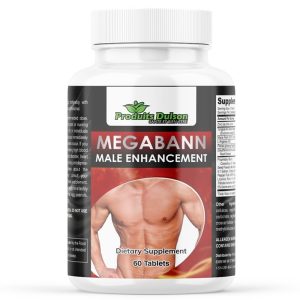
Megabann Male Enhancement
After everything we have covered about label transparency and clinically relevant dosages, it is fair to ask how our own products measure up. Megabann Male Enhancement uses natural ingredients traditionally associated with male endurance and stamina in a 60-tablet formula. We encourage you to apply the same evaluation framework from this article to our products — transparent scrutiny builds trust.
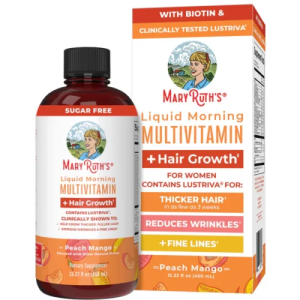
Liquid Morning Multi Vitamin
For men who want a solid nutritional foundation without the complexity of managing multiple individual supplements, a liquid multivitamin offers practical advantages. The liquid format may support better absorption — especially relevant for the nutrient absorption challenges we discussed for men over 40. It is a simple first step for building a supplement routine grounded in the principles outlined in this guide.
Third-Party Testing — What USP, NSF, and Others Actually Mean
Third-party testing is the closest thing to a guarantee you can get in the supplement world. Here is what each certification actually verifies — and what it does not.
| Certification | What It Verifies | What It Does Not Verify |
|---|---|---|
| USP (United States Pharmacopeia) | Product contains what label claims, dissolves properly, free from harmful contaminants, manufactured under GMP | Does not verify the product works or is effective for its intended purpose |
| NSF International | Label accuracy, absence of contaminants, GMP compliance, annual facility audits | Does not test for efficacy or verify marketing claims |
| NSF Certified for Sport | Everything NSF covers plus testing for 270+ substances banned in competitive sports | Still does not verify efficacy |
| Informed Sport / Informed Choice | Batch-by-batch testing for WADA banned substances | Does not verify label accuracy as thoroughly as USP/NSF |
| ConsumerLab Seal | Independent testing of off-the-shelf products for label accuracy and contamination | Voluntary participation — many quality products are not tested |
A few critical points. None of these certifications verify that a supplement actually works for what it claims. They verify quality and accuracy — that the product contains what it says, in the amounts it says, without harmful contaminants. That is still enormously valuable, because it eliminates the most dangerous and deceptive products from consideration.
The absence of any third-party testing does not automatically mean a product is bad. But it means you are relying entirely on the manufacturer’s own quality claims. For a product category where the FDA does not require pre-market approval, that is a significant amount of trust to place in a single source.
✅ Practical Rule: If you are choosing between two similar products and one has USP or NSF certification while the other does not, go with the certified one. The price difference is usually small, and the assurance is worth it — especially in the men’s vitality category, where undisclosed pharmaceutical ingredients have been found in products before.
Red Flags That Should Make You Walk Away
After evaluating hundreds of supplement products over the years, we have identified the warning signs that consistently predict low-quality or deceptive products. If you see any of these, proceed with extreme caution.
Immediate Red Flags
- Claims of « guaranteed results » or « works in 24 hours » — natural ingredients do not work this way
- Proprietary blends with no individual ingredient dosages
- The phrase « doctor recommended » without naming the doctor or citing the recommendation
- Before-and-after photos (often fake or misleading)
- Reviews that sound suspiciously similar or use identical phrasing
- « Limited time offer » pressure tactics that never actually expire
- No clear manufacturer information, physical address, or contact details
- Claims that the product replaces medication or medical treatment
🚨 Caution: If a men’s vitality supplement produces dramatic, drug-like effects within hours — especially effects on sexual function — it may contain undisclosed pharmaceutical ingredients. This has been documented repeatedly by the FDA. Such products are not only illegal but potentially dangerous, especially for men taking heart or blood pressure medications. Report suspected products to the FDA’s MedWatch program.
Communities like r/Supplements on Reddit are useful for this kind of due diligence. Real user experiences — including negative ones — give you a practical picture that no marketing page will provide. Look for patterns: if multiple independent users report the same issues with a product, that signal is worth paying attention to.
Here is a straightforward heuristic: if a product sounds too good to be true, it almost certainly is. Legitimate natural supplements are modest in their claims because they have to be — the science supports modest, gradual benefits, not dramatic overnight transformations.

What Good Labeling Actually Looks Like
To give you a concrete reference point, here is what you should see on a well-made men’s vitality supplement.
On the Supplement Facts Panel
Each active ingredient listed individually with specific dosage in mg. Standardized extract specifications where applicable (e.g., « Ashwagandha root extract, standardized to 5% withanolides »). Clear serving size and servings per container. Percent daily values for vitamins and minerals. The « Other Ingredients » section listing capsule material, fillers, and any allergens.
On the Rest of the Label
Manufacturer name and address. Batch or lot number for traceability. Expiration date or « best by » date. Storage instructions. Appropriate warnings (consult doctor if pregnant, nursing, taking medications, or have pre-existing conditions). Third-party testing seal if applicable. Realistic, hedged benefit claims rather than guaranteed outcomes.
Compare this to what you actually see on many products in this category, and the gap becomes obvious. The products that hide behind vague language, proprietary blends, and missing certifications are telling you something about their confidence in their own formula — even if they would never say it out loud.
How to Match a Supplement to Your Actual Needs
The most common mistake men make is buying a supplement based on general marketing rather than their specific situation. Here is a practical matching framework.
If Your Primary Issue Is Energy and Fatigue
Start with a comprehensive blood panel to check B12, vitamin D, iron, and thyroid function. If deficiencies are found, address those first with targeted supplementation. If blood work is normal, consider an adaptogen like ashwagandha for stress-related fatigue, or a comprehensive multivitamin to cover general nutrient gaps. A liquid format may offer better absorption, especially for men over 40.
If Your Primary Issue Is Hormonal (Libido, Mood, Drive)
Check testosterone levels (total and free) and cortisol. If testosterone is low-normal and cortisol is elevated, stress management and cortisol-reducing supplements (ashwagandha, magnesium) may be more helpful than a direct testosterone-support formula. If specific nutritional deficiencies (zinc, vitamin D) are identified, address those. Only consider hormone-specific herbal ingredients (tongkat ali, fenugreek) after the foundational factors are covered.
If Your Primary Issue Is Physical Performance
Ensure protein intake is adequate (1.4-1.6g per kg body weight). Consider creatine monohydrate — one of the most studied and effective performance supplements available. For blood flow support during exercise, L-citrulline at research doses (3-6g daily) may help. Magnesium supports muscle function and recovery. Address sleep quality, as poor sleep significantly impairs physical recovery and adaptation.
If You Are Starting From Scratch
Begin with a high-quality multivitamin as your foundation — it covers the broadest range of potential nutritional gaps with the least complexity. Give it 4-6 weeks while simultaneously optimizing sleep, exercise, and stress management. Then reassess: what has improved, and what still needs attention? Add one targeted supplement at a time based on that assessment.
This approach is slower than grabbing the most aggressively marketed product off the shelf. But it is also far more likely to actually work — because you are matching solutions to your specific situation rather than hoping that a generic formula happens to address your particular needs.
Common Buying Mistakes Even Smart Men Make
Intelligence does not protect you from marketing. Here are the traps that catch even well-informed buyers.
⚠️ Important: Price is not a reliable indicator of quality. Some of the highest-priced supplements on the market use proprietary blends, pixie-dusted ingredients, and no third-party testing. Conversely, some moderately priced products have excellent formulations. Evaluate the product, not the price tag.
Buying based on Amazon reviews. Amazon’s review system is heavily gamed in the supplement category. Incentivized reviews, review manipulation services, and the mixing of authentic and fake listings make it one of the least reliable sources for supplement evaluation. A product with 4.8 stars and 10,000 reviews is not necessarily better than one with 4.2 stars and 200 reviews.
Switching products too quickly. Many men try a supplement for 2-3 weeks, feel nothing dramatic, and switch to something else. Then they repeat the cycle. The irony is that most natural ingredients need 4-8 weeks of consistent use before meaningful effects emerge. By switching constantly, you never give anything a fair chance to work.
Stacking before establishing a baseline. Starting three new supplements simultaneously makes it impossible to know which one is helping — or causing a side effect. Always introduce one new product at a time. Give it a full evaluation period. Then decide whether to keep it before adding the next thing.
Ignoring the « Other Ingredients » section. Active ingredients get all the attention, but the inactive ingredients matter too. Excessive fillers, artificial colorants, and added sugars (especially in gummy formats) can undermine the overall quality of a product. The cleaner the « Other Ingredients » list, the better.
Conflating « natural » with « harmless. » Natural ingredients can still have interactions with medications, can still cause side effects at high doses, and can still be inappropriate for certain health conditions. The word « natural » on a label does not eliminate the need for basic due diligence and — when in doubt — a conversation with your doctor.

The Realistic Timeline — What to Expect and When
Setting realistic expectations is one of the most important things you can do for your supplement experience. Here is what the evidence suggests about timelines for common natural ingredients.
| Timeframe | What You Might Notice | What Is Happening |
|---|---|---|
| Week 1-2 | Minimal noticeable changes for most ingredients | Blood levels of supplemented nutrients are beginning to rise; body is adjusting to new inputs |
| Week 2-4 | Subtle improvements in sleep quality, mood stability, or general energy for some men | Nutrient stores are being replenished; adaptogenic herbs are beginning to modulate stress pathways |
| Week 4-6 | More noticeable changes in energy, motivation, exercise recovery | Hormonal and metabolic effects of consistent supplementation begin to manifest; cortisol patterns may shift |
| Week 6-8 | Clearer picture of whether the supplement is working for you | This is the typical timeframe for most clinical trials to measure outcomes; a fair evaluation point |
| Week 8-12 | Full assessment period — improvements should be relatively stable if the supplement is effective | Long-term adaptations are established; this is when you should decide whether to continue, adjust, or try a different approach |
If you feel nothing after 8-10 weeks of consistent use at an appropriate dose, the product is probably not the right match for your specific situation. That does not mean the ingredients are useless — it may mean your particular issue lies elsewhere, the dose needs adjusting, or a different combination of ingredients would be more effective.
The point is not to keep buying forever on faith. The point is to give a quality product a fair trial before making a judgment.
A Decision Framework You Can Use Today
Here is a simple, step-by-step process you can follow the next time you are evaluating a men’s vitality supplement — whether it is from our store or anywhere else.
Your Supplement Evaluation Checklist
- Step 1: Flip the bottle — read the Supplement Facts panel before the front label
- Step 2: Check for proprietary blends — if individual dosages are hidden, be cautious
- Step 3: Compare listed doses to clinically studied amounts (use the table in this article)
- Step 4: Verify ingredient forms — standardized extracts and bioavailable mineral forms
- Step 5: Look for third-party testing seals (USP, NSF, Informed Sport)
- Step 6: Check the « Other Ingredients » for unnecessary fillers or artificial additives
- Step 7: Research the manufacturer — physical address, contact info, reputation
- Step 8: Calculate the true daily cost based on serving size and servings per container
- Step 9: Read independent reviews in communities (not just on the sales page)
- Step 10: Commit to a full 8-week trial before evaluating results
This framework will not steer you wrong. Products that pass all ten steps are generally worth trying. Products that fail on multiple steps are generally not — regardless of how impressive their marketing looks.
And remember: the best supplement in the world is a complement to — not a substitute for — good sleep, regular exercise, a nutrient-dense diet, and managed stress. Get those right first. Then let supplementation do what it does best: fill the remaining gaps.
Our team at Dulson Sante is always available if you have questions about specific products or need help choosing the right approach for your situation. Get in touch with us anytime — we genuinely enjoy these conversations.
Frequently Asked Questions
Is there a single certification that guarantees a supplement is safe and effective?
No single certification guarantees both safety and efficacy. USP and NSF verify label accuracy, contaminant testing, and manufacturing quality — which covers the safety side. But no certification tests whether a supplement actually works for its intended purpose, because that would require the kind of clinical trials that only pharmaceutical drugs go through. The best approach is to combine third-party quality certification with your own research into whether the ingredients have evidence-based dosages. Checking our product selection is a good starting point for quality options.
How much should I expect to spend on a quality men’s vitality supplement?
Quality men’s vitality supplements typically cost between $30 and $70 per month, depending on the ingredients and their dosages. Products significantly cheaper than this range may be cutting corners on ingredient quality, dosing, or testing. Products significantly more expensive may be charging a premium for branding rather than formulation. The best indicator of value is not the price — it is whether the product delivers clinically relevant doses of well-researched ingredients with third-party verification.
Should I choose a multi-ingredient formula or individual supplements?
Both approaches have merits. Multi-ingredient formulas offer convenience and are designed with ingredient compatibility in mind. Individual supplements allow you to customize doses and isolate what works for you specifically. A practical middle ground: start with a well-formulated multi-ingredient product for 8 weeks. If it works well, you have your answer. If it partially works, you can switch to individual ingredients to fine-tune your approach based on what you learned.
Can a men’s vitality supplement interact with my medications?
Yes — and this is an area where caution is essential. Common interactions include ashwagandha with thyroid and blood pressure medications, high-dose zinc with certain antibiotics, magnesium with diabetes drugs, and various herbal ingredients with blood thinners. Always consult your healthcare provider before starting any supplement if you take prescription medications. Bring the actual product label to your appointment so your doctor can review the specific ingredients and dosages.
Are liquid supplements better than capsules or tablets?
Liquid supplements may offer an absorption advantage, particularly for men over 40 whose stomach acid and digestive efficiency have declined. Liquids bypass the dissolution step that tablets require, meaning the nutrients are available for absorption more quickly. However, liquid formats are not always practical for every ingredient, and taste can be a factor. For multivitamins and mineral supplements, liquid is generally a good choice. For herbal extracts, capsules often remain the most practical and palatable delivery method.
« Dietary supplements are products intended to add nutritional value to the diet. They are regulated as foods, not drugs, and manufacturers are responsible for ensuring their safety before marketing. »
— U.S. Food and Drug Administration, Dietary Supplement Overview (2024)
🌿 Explore Our Natural Products
⚠️ Disclaimer: The information in this article is provided for educational purposes only and does not constitute medical advice. Always consult a qualified healthcare professional before starting any supplement or making changes to your health routine. Individual results may vary. These statements have not been evaluated by the Food and Drug Administration. This product is not intended to diagnose, treat, cure, or prevent any disease.