
Coconut Oil for Cooking, Skin, and Hair: One Ingredient With Multiple Everyday Uses
Your pantry staple might also be your best-kept beauty secret. Here is how to use coconut oil across your kitchen, skincare, and haircare routines — without the guesswork or the marketing fluff.
In This Article
- Why Coconut Oil Keeps Showing Up Everywhere
- What Makes Coconut Oil Different From Other Oils
- Coconut Oil in the Kitchen: Cooking Tips That Actually Work
- Coconut Oil for Skin: What Works, What Does Not
- Coconut Oil for Hair: From Deep Conditioning to Daily Use
- One Jar, Three Uses: When Crossover Makes Sense
- How to Choose the Right Coconut Oil for Each Purpose
- Common Mistakes People Make With Coconut Oil
- Benefits and Honest Considerations
- Building a Simple Coconut Oil Routine
- Frequently Asked Questions
Walk into any health food store, scroll through any natural beauty forum, or peek into any wellness influencer’s cabinet, and you will almost certainly find a jar of coconut oil sitting there. The stuff has earned a near-legendary reputation over the past decade — and for once, the hype is not entirely unfounded.
But here is the problem. Most guides you find online treat coconut oil as either a cooking ingredient OR a beauty product. They rarely tell you when the same jar works for both, which types matter for which purpose, or the specific amounts that actually make a difference. At Dulson Sante, we believe you deserve the full picture — including the honest warnings that most listicles conveniently skip.
This article pulls everything together in one place. You will learn the science behind why coconut oil works differently than other oils, exactly how to use it in cooking without going overboard on saturated fat, which skin types it suits (and which it absolutely does not), plus practical hair treatment methods with real measurements. No fluff, no miracle claims — just useful information you can act on today.

Why Coconut Oil Keeps Showing Up Everywhere
ℹ️ Did You Know: Coconut oil has been used for thousands of years across Southeast Asia, the Pacific Islands, and parts of South America — long before it became a Western wellness trend. In countries like the Philippines and Sri Lanka, it has traditionally served as both a cooking fat and a skin protectant for generations.
The resurgence of coconut oil in Western markets is not really a new discovery. It is a rediscovery. For decades, coconut oil was shunned because of its high saturated fat content. Then around 2010, a wave of research started questioning whether all saturated fats behave the same way in the body — and coconut oil suddenly found itself back in the spotlight.
What makes it unusual is its versatility. Most cooking oils are just that — cooking oils. You would not rub olive oil through your hair or use canola oil as a moisturizer. But coconut oil crosses those boundaries in ways that actually make biological sense, thanks to its unique fatty acid profile.
The global coconut oil market has grown steadily, and surveys suggest that a significant portion of consumers now use it for at least two different purposes. That crossover appeal is not marketing — it is chemistry. And understanding that chemistry is the first step to using coconut oil effectively rather than just enthusiastically.
~50%
Approximate lauric acid content in virgin coconut oil — the highest natural source of this medium-chain fatty acid
What Makes Coconut Oil Different From Other Oils
To understand why coconut oil works across cooking, skin, and hair, you need to understand what is actually in it. And the short answer is: medium-chain fatty acids, particularly lauric acid.
Most dietary fats contain long-chain fatty acids with 14 to 22 carbons. These need to be broken down by bile salts and transported through the lymphatic system before your body can use them. Medium-chain fatty acids — with 6 to 12 carbons — take a shortcut. They go directly to the liver through the portal vein and get metabolized quickly. This is why some researchers have explored whether medium-chain triglycerides (MCTs) may support energy metabolism differently than other fats.
That lauric acid content is the real star here. In the body, lauric acid converts to monolaurin, a compound that has been studied for its antimicrobial properties. On the skin, it may help maintain the skin’s protective barrier. In hair, it penetrates the hair shaft more effectively than most other oils because of its low molecular weight and straight-chain structure — a finding published in the Journal of Cosmetic Science (Rele and Mohile, 2003).
The other thing that sets coconut oil apart is its melting point — about 76 degrees Fahrenheit (24 degrees Celsius). This means it transitions easily between solid and liquid states at room temperature, making it versatile enough to work as a solid balm for skin, a liquid oil for cooking, and a spreadable treatment for hair. That physical property alone explains a lot of its crossover appeal.
Coconut Oil in the Kitchen: Cooking Tips That Actually Work
Let us start with the use case that generates the most debate: cooking. Coconut oil is roughly 82% saturated fat — higher than butter. That number alone scared nutritionists for decades. But the conversation has gotten more nuanced.
The American Heart Association still recommends limiting saturated fat intake, and we are not going to argue with that guidance. What we will say is that replacing all your cooking oils with coconut oil would be excessive. Using it strategically for specific cooking applications, however, can make practical sense.
💡 Good to Know: Virgin coconut oil has a smoke point of approximately 350 degrees Fahrenheit (177 degrees Celsius). Refined coconut oil sits higher at around 400 degrees Fahrenheit (204 degrees Celsius). This means refined is better for high-heat cooking like stir-frying, while virgin works well for medium-heat sauteing and baking.
Best cooking uses for coconut oil:
- Sauteing vegetables: Use about 1 tablespoon of virgin coconut oil over medium heat. It adds a subtle sweetness that pairs well with sweet potatoes, carrots, and squash.
- Baking: Replace butter at a 1:1 ratio. It works particularly well in banana bread, muffins, and granola bars. Melt it first if the recipe calls for melted butter.
- Smoothies: Add 1 teaspoon to a morning smoothie for a slight creaminess and a small dose of MCTs.
- Popcorn: Melt 2 tablespoons over medium heat and pop your kernels in it. This is one of the best-kept kitchen secrets — the flavor is outstanding.
Where to be cautious: Deep frying in coconut oil works (refined only) but gets expensive fast. And if you are watching your saturated fat intake for cardiovascular reasons, keep portions moderate — the American Heart Association’s current recommendation is less than 13 grams of saturated fat per day on a 2,000-calorie diet. One tablespoon of coconut oil contains about 12 grams.
The practical move is to rotate coconut oil with other healthy fats like avocado oil and extra-virgin olive oil, rather than using it as your sole cooking fat.
Natural Coconut Oils Worth Exploring
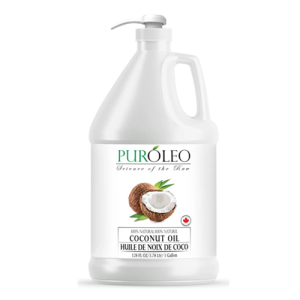
Puroleo Coconut Oil
If you want one jar that covers the cooking, skin, and hair applications we just discussed, Puroleo Coconut Oil is 100% pure and suitable for all three uses. Its quality makes it a practical starting point for anyone looking to simplify their natural oil routine without compromising on purity.
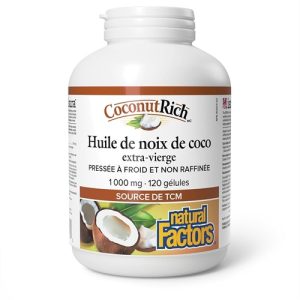
Huile de Noix de Coco
For those who want an affordable entry into cooking with coconut oil, this 100% pure and natural option delivers the lauric acid-rich profile we covered above. It works well for baking, sauteing, and basic hair treatments — a solid everyday coconut oil at an accessible price point.
Coconut Oil for Skin: What Works, What Does Not
This is where things get interesting — and where most articles either oversell or undersell. Coconut oil has legitimate skincare applications, but it is not universally suitable for every skin type or every area of the body. Let us break it down honestly.
| Application | How It Works | Best For | Avoid If |
|---|---|---|---|
| Body moisturizer | Creates occlusive barrier, reduces transepidermal water loss | Dry skin on legs, arms, elbows | You prefer fast-absorbing textures |
| Face moisturizer | Same mechanism, but heavier on facial skin | Dry, non-acne-prone skin only | Oily or acne-prone skin — highly comedogenic |
| Makeup remover | Oil dissolves oil-based makeup effectively | All skin types (rinse thoroughly) | Sensitive eye area without careful removal |
| Cuticle treatment | Softens and hydrates dry nail beds | Everyone with dry cuticles | No major cautions |
| After-sun care | May help soothe and moisturize sun-exposed skin | Mild sun exposure recovery | Actual sunburn (see a doctor) |
⚠️ Important: Coconut oil has a comedogenic rating of 4 out of 5, meaning it is highly likely to clog pores on the face. If you have oily, combination, or acne-prone skin, using coconut oil on your face may trigger breakouts. This is the single most common mistake people make based on internet advice. Stick to body application if your facial skin is anything other than dry.
Amounts that work: For body moisturizing, about half a teaspoon per limb is enough — warm it between your palms until it liquefies, then apply to slightly damp skin right after a shower. The dampness helps trap moisture underneath the oil barrier. For cuticles, a drop per finger rubbed in before bed does the job. As a makeup remover, a dime-sized amount massaged gently over the face, then wiped off with a warm cloth, removes most products effectively.
Communities like r/SkincareAddiction on Reddit have extensive discussions about coconut oil on skin, and the consensus generally matches what the research says — it works beautifully on the body but is risky on acne-prone faces. That real-world feedback is worth paying attention to.
Coconut Oil for Hair: From Deep Conditioning to Daily Use
If there is one area where coconut oil truly earns its reputation, it is hair care. The research here is actually quite solid. That 2003 study we mentioned earlier showed that coconut oil reduced protein loss in both damaged and undamaged hair — and it outperformed sunflower oil and mineral oil in the same tests.
The reason comes back to lauric acid. Its low molecular weight and straight linear chain allow it to penetrate the hair shaft in a way that bulkier oils cannot. It does not just sit on top of your hair — it gets inside and strengthens from within.
Pre-Wash Treatment (Best Results)
Apply 1-2 tablespoons of coconut oil to dry hair from mid-shaft to ends. Avoid the roots if your scalp is oily. Leave on for 30 minutes to overnight (use a shower cap or old pillowcase). Wash out with your normal shampoo — you may need two lathers to remove all the oil. Do this once or twice a week.
Quick Frizz Control
Rub a pea-sized amount between your palms until liquid, then smooth over dry hair focusing on the ends. This works particularly well in humid climates or for flyaway management. Less is more — too much will make hair look greasy.
Scalp Massage
Warm 1 tablespoon and massage into the scalp with fingertips in circular motions for 5 minutes. This may help support scalp circulation and hydration. Leave for 20 minutes, then shampoo. Best for dry scalps — if you have dandruff caused by fungal issues, consult a dermatologist first.
Split End Sealant
A tiny amount — less than a pea — rubbed between fingertips and applied to the very tips of dry hair can temporarily smooth and seal split ends between trims. This does not repair splits permanently, but it improves appearance and may slow further splitting.
Hair types that respond best: Coarse, thick, dry, or curly hair tends to benefit most from coconut oil treatments. Fine or thin hair can feel weighed down or greasy, so use minimal amounts and focus on ends only. If your hair is color-treated, coconut oil may actually help protect against some protein loss from chemical processing.
One Jar, Three Uses: When Crossover Makes Sense
Here is the question nobody answers clearly: can you actually use the same jar of coconut oil in your kitchen, on your skin, and in your hair? The short answer is yes — with some caveats.
If you are using pure, virgin, unrefined coconut oil with no additives, it is the same product whether you put it on toast or on your elbows. There is no separate « food-grade » versus « cosmetic-grade » standard for pure coconut oil. The difference is usually in the branding and the price tag, not the product itself.
💡 Good to Know: The one exception is fractionated coconut oil, which has had its long-chain fatty acids removed. This makes it stay liquid at room temperature and absorb faster — great for skin, but it lacks the lauric acid that provides most of the benefits for cooking and hair. If you buy fractionated coconut oil, it is a skincare product, not a kitchen ingredient.
Hygiene rules for crossover use:
- Always use a clean spoon or spatula to scoop from the jar — never dip fingers that have been in your hair back into the jar you cook with.
- Consider transferring a portion to a smaller container for bathroom use. This keeps your main kitchen jar clean.
- Store your kitchen jar away from the stove (heat degrades it over time) and your bathroom jar away from shower spray.
The practical reality is that having one large jar of quality coconut oil and portioning it out for different uses is both economical and sensible. You do not need three separate products — you need one good one and a couple of clean containers.
If you are exploring other natural oils alongside coconut oil, our shop carries a curated selection that includes options for different needs and budgets.
Complement Your Coconut Oil Routine
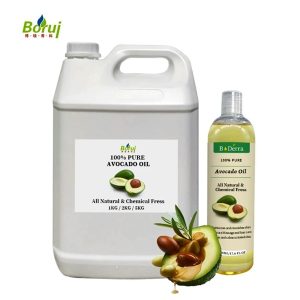
Avocado Oil
We mentioned rotating cooking oils for a balanced fat profile — avocado oil is the ideal companion to coconut oil. With a higher smoke point and a different fatty acid profile rich in oleic acid, it fills the gaps where coconut oil falls short, especially for high-heat cooking and lighter skin applications.
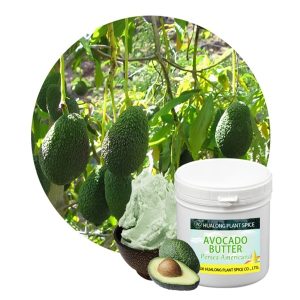
Avocado Butter
If you found the body moisturizing section useful but want something richer than coconut oil for very dry areas like elbows, heels, and knees, avocado butter may be a better fit. It is specifically designed for intensive skin nourishment and pairs well with the coconut oil routine we outlined above.
How to Choose the Right Coconut Oil for Each Purpose
Not all coconut oil is created equal, and the label matters more than most people realize. Here is what to actually look for depending on your intended use.
Coconut Oil Buying Checklist
- For cooking: Look for « virgin » or « extra-virgin » for medium-heat use; choose « refined » for high-heat cooking. Organic certification is a plus but not essential for cooking quality.
- For skin: Virgin, cold-pressed, unrefined coconut oil is the best choice. Check that the only ingredient listed is coconut oil — no fragrances, no preservatives, no blending oils.
- For hair: Same as skin — virgin and unrefined. The lauric acid in unrefined coconut oil is what penetrates the hair shaft. Refined versions lose some of this during processing.
- For all three: Buy a large jar of organic, virgin, cold-pressed coconut oil. This is your universal option.
- Storage: Coconut oil should be stored in a cool, dark place. It lasts roughly two years when stored properly. If it smells rancid or sour, toss it.
One thing the marketing does not always tell you: « extra-virgin » coconut oil is essentially a marketing term. Unlike olive oil, there is no regulated distinction between « virgin » and « extra-virgin » for coconut oil. Both mean the oil was extracted from fresh coconut meat without chemical processing. Do not pay extra just for the « extra » on the label.
Price versus quality: Expensive does not always mean better, but very cheap coconut oil is often refined, deodorized, and bleached (RBD) — which strips out many of the beneficial compounds. A mid-range virgin coconut oil from a reputable source is usually the sweet spot for multi-use purposes.

Common Mistakes People Make With Coconut Oil
After years of seeing coconut oil discussed online — and frankly, after making some of these mistakes ourselves at Dulson Sante when we first started working with natural oils — here are the pitfalls worth knowing about.
🚨 Caution: Applying coconut oil to acne-prone facial skin is the number one mistake we see. Its comedogenic rating of 4 out of 5 means it clogs pores in most people with oily or combination skin. If you break out after using it on your face, this is almost certainly why.
Mistake #1: Using it as your only cooking fat. Coconut oil is high in saturated fat. Dietary guidelines recommend getting most of your fat from unsaturated sources. Use coconut oil in rotation with olive oil and avocado oil — not as a replacement for all of them.
Mistake #2: Applying too much to hair. A little goes a long way. Slathering coconut oil on thick and leaving it for days does not produce better results — it just makes your hair impossible to wash out. Stick to 1-2 tablespoons for a pre-wash treatment, less for daily frizz control.
Mistake #3: Heating virgin coconut oil past its smoke point. Virgin coconut oil smokes at about 350 degrees Fahrenheit. Push past that and you get burnt flavor, smoke, and degraded nutritional value. Use refined for high-heat cooking.
Mistake #4: Expecting it to replace sunscreen. Some blogs claim coconut oil has SPF properties. While it may offer extremely minimal UV filtering (estimated SPF of about 1-7 in some lab studies), this is nowhere near sufficient for sun protection. Always use proper sunscreen.
Mistake #5: Storing it in direct sunlight or next to the stove. Heat and light accelerate oxidation. Keep it in a cool pantry or cabinet with the lid on tight.
Benefits and Honest Considerations
We have covered a lot of ground, so let us lay out the full picture — the genuine benefits and the things you should weigh before going all-in on coconut oil.
Benefits
- Genuinely versatile — one product for kitchen, skin, and hair
- Lauric acid may support skin’s natural barrier function
- Proven ability to reduce protein loss in hair (published research)
- Stable cooking fat with long shelf life
- MCTs are metabolized differently than long-chain fats
- Cost-effective when one jar replaces multiple products
- Free from synthetic additives in pure form
Things to Consider
- High comedogenic rating — not suitable for acne-prone faces
- 82% saturated fat — moderation matters for heart health
- Lower smoke point than many cooking oils (virgin variety)
- Can feel heavy or greasy on fine hair
- Not a complete moisturizer — lacks humectant properties
- Quality varies significantly between brands
The honest bottom line? Coconut oil is a genuinely useful natural product — but it is not a miracle substance. Use it where it makes sense, skip it where it does not, and combine it with other oils and products for the best results. That balanced approach is more sustainable and more effective than treating any single ingredient as a cure-all.
Discover Our Full Range of Natural Oils →
Building a Simple Coconut Oil Routine
If you are ready to start incorporating coconut oil into your daily life, here is a practical weekly routine that covers all three use cases without overcomplicating things.
Monday and Thursday: Pre-Wash Hair Treatment
Apply 1-2 tablespoons to dry hair, mid-shaft to ends. Leave for 30 minutes while you do other things, then shampoo normally. This twice-weekly schedule is enough for most hair types.
Daily: Post-Shower Body Moisturizer
After toweling off, apply half a teaspoon per limb to slightly damp skin. Focus on dry areas — elbows, knees, shins. This takes about 60 seconds.
Two to Three Times a Week: Cooking
Use 1 tablespoon for sauteing vegetables or as a butter replacement in baking. Rotate with olive oil and avocado oil on other days for fatty acid variety.
Nightly: Cuticle Treatment
Before bed, rub a drop of coconut oil into each cuticle and nail bed. This takes 30 seconds and makes a noticeable difference within a week or two.
That is it. No elaborate 15-step routine. No expensive specialty products. Just one jar of quality coconut oil and a few minutes of your time spread across the week. If you want to talk to our team about which coconut oil suits your needs, we are always happy to help.

Frequently Asked Questions
Can I use the same coconut oil for cooking and skin care?
Yes, as long as it is pure, virgin, unrefined coconut oil with no additives. The product is chemically identical whether labeled for culinary or cosmetic use. The main thing to watch is hygiene — use a clean utensil to scoop from the jar, and consider transferring a portion to a separate container for bathroom use. You can find quality multi-use options in our natural products collection.
Is coconut oil safe for acne-prone skin?
Generally, no. Coconut oil has a comedogenic rating of 4 out of 5, which means it is highly likely to clog pores. If you are prone to breakouts, especially on the face, we recommend using it only on the body — legs, arms, elbows — and choosing a non-comedogenic facial moisturizer instead. Some people with acne-prone skin use it successfully as a makeup remover if they rinse thoroughly, but this requires careful attention to complete removal.
How much coconut oil per day is considered safe for cooking?
There is no official upper limit, but moderation is key given its saturated fat content. One to two tablespoons per day is a common range that fits within most dietary guidelines for saturated fat intake. The American Heart Association recommends keeping saturated fat to less than 5-6% of total calories for people with cardiovascular risk factors. One tablespoon of coconut oil contains about 12 grams of saturated fat.
Does coconut oil help with hair growth?
There is limited direct evidence that coconut oil promotes hair growth. What research does support is that it reduces protein loss and strengthens existing hair, which may help reduce breakage and retain length over time. This is different from growing new hair. If you are concerned about hair loss, that is worth discussing with a dermatologist. Coconut oil is better thought of as a strengthening and conditioning tool than a growth treatment.
What is the difference between virgin and refined coconut oil?
Virgin coconut oil is extracted from fresh coconut meat without chemical processing — it retains its natural scent, flavor, and most nutrients including lauric acid. Refined coconut oil is processed from dried coconut (copra), then bleached and deodorized. It has a neutral flavor, higher smoke point, and longer shelf life, but fewer bioactive compounds. For skin and hair, virgin is generally the better choice. For high-heat cooking, refined works better.
« Coconut oil, owing to its low molecular weight and straight linear chain, is able to penetrate inside the hair shaft. This unique ability to reduce protein loss from hair makes it stand out from other dietary and cosmetic oils. »
— Rele and Mohile, Journal of Cosmetic Science, 2003
🌿 Explore Our Natural Products →
⚠️ Disclaimer: The information in this article is provided for educational purposes only and does not constitute medical advice. Always consult a qualified healthcare professional before starting any supplement or making changes to your health routine. Individual results may vary. These statements have not been evaluated by the Food and Drug Administration. This product is not intended to diagnose, treat, cure, or prevent any disease.