
Cold-Pressed Coconut Oil vs. Regular Coconut Oil: What Is the Real Difference?
You are staring at two jars on the shelf. One says « cold-pressed virgin. » The other just says « coconut oil. » The price gap is significant. Here is how to know which one actually deserves your money — based on how you plan to use it.
In This Article
- Why This Comparison Matters More Than You Think
- How Each Type of Coconut Oil Is Made
- The Numbers Side by Side: Smoke Point, Nutrients, Shelf Life
- Use-Case Matchup: Which Oil Wins for Each Purpose
- Flavor and Aroma: What to Expect From Each
- Price Versus Value: When the Premium Is Worth It
- How to Read Labels and Avoid Marketing Traps
- Mistakes People Make When Choosing Coconut Oil
- Benefits and Honest Trade-Offs of Each Type
- Our Practical Recommendation
- Frequently Asked Questions
If you have spent more than five minutes shopping for coconut oil, you have probably noticed the labels can be confusing. Cold-pressed. Virgin. Extra-virgin. Refined. Expeller-pressed. RBD. Organic. The terminology alone is enough to make you grab whatever is cheapest and walk away.
And that is exactly the problem. Because the type of coconut oil you buy genuinely matters for how you plan to use it. Cold-pressed virgin coconut oil and regular refined coconut oil are not just different labels on the same product — they are made through fundamentally different processes, and those processes affect everything from nutrient content to smoke point to how your hair responds to a treatment.
At Dulson Sante, we work with both types daily, and we have seen how the wrong choice leads to disappointing results. This article gives you a clear, no-nonsense comparison — with a specific recommendation for each common use case. No vague « it depends » answers. Actual guidance you can use at the store.

Why This Comparison Matters More Than You Think
ℹ️ Did You Know: The global coconut oil market is projected to continue growing through the late 2020s, with cold-pressed varieties commanding a growing share. Yet consumer surveys consistently show that most buyers cannot explain the difference between cold-pressed and refined — they just assume more expensive means better.
Here is why this is not a trivial distinction. If you use cold-pressed coconut oil for deep frying, you are wasting money and potentially producing harmful smoke compounds. If you use refined coconut oil for a hair mask, you are getting fewer of the beneficial compounds that make coconut oil effective for hair in the first place.
The right type for the right purpose is not just about being a savvy shopper. It is about getting the results you are actually looking for. And the difference can be dramatic — both in your cooking outcomes and in how your skin and hair respond.
Most comparison articles online restate the processing differences and then leave you hanging. They tell you what each type IS, but not what to actually BUY for your specific needs. That is the gap we are filling here.
350°F vs 400°F
Smoke Point: Virgin vs. Refined
~49%
Lauric Acid in Virgin (slightly less in refined)
2+ Years
Shelf Life for Both Types
How Each Type of Coconut Oil Is Made
Understanding the production process is the key to understanding why these two products behave differently. Let us walk through each one.
Cold-Pressed Virgin Coconut Oil
Cold-pressed coconut oil starts with fresh coconut meat — not dried copra. The meat is mechanically pressed at temperatures that typically stay below 120 degrees Fahrenheit (49 degrees Celsius), though exact standards vary by producer. No chemical solvents are used. The result is an oil that retains its natural coconut aroma, flavor, and most of its original polyphenols, tocopherols, and phytosterols.
According to research documented on Wikipedia, virgin coconut oil retains higher levels of antioxidant compounds compared to refined versions, largely because the low-temperature extraction preserves heat-sensitive nutrients.
Regular (Refined) Coconut Oil
Refined coconut oil — sometimes labeled RBD (Refined, Bleached, Deodorized) — starts with dried coconut meat called copra. The oil is extracted using mechanical pressing or solvent extraction, then undergoes bleaching (usually through clay filtration, not chemical bleach) and steam deodorizing to remove the coconut scent and flavor.
This process strips out some of the polyphenols and volatile compounds but leaves the core fatty acid profile largely intact. The lauric acid content drops slightly but remains significant. What you lose in antioxidants and aroma, you gain in a neutral flavor and a higher smoke point.
🥥 Cold-Pressed Virgin
- Fresh coconut meat
- Mechanical pressing at low temperatures
- No chemical solvents
- Retains aroma, flavor, polyphenols
- Lower smoke point (~350°F)
⚙️ Regular Refined
- Dried copra
- Mechanical or solvent extraction
- Bleached and deodorized
- Neutral flavor, fewer antioxidants
- Higher smoke point (~400°F)
The Numbers Side by Side: Smoke Point, Nutrients, Shelf Life
Let us put the data where it is most useful — in a comparison table you can reference any time you are shopping or choosing which jar to reach for.
| Property | Cold-Pressed Virgin | Regular Refined | Winner |
|---|---|---|---|
| Smoke Point | ~350°F (177°C) | ~400°F (204°C) | Refined (for high-heat cooking) |
| Lauric Acid Content | ~49% | ~44-47% | Virgin (slightly higher) |
| Polyphenols / Antioxidants | Higher — preserved by low-temp extraction | Lower — reduced by processing | Virgin (significantly higher) |
| Flavor / Aroma | Distinct coconut flavor and scent | Neutral — no coconut taste | Depends on preference |
| Shelf Life | ~2 years (proper storage) | ~2 years (proper storage) | Tie |
| Price Range | Higher ($0.50-$1.50+ per ounce) | Lower ($0.20-$0.60 per ounce) | Refined (budget-friendly) |
| Best for Skin | Preferred — more nutrients intact | Acceptable — but fewer bioactive compounds | Virgin |
| Best for Hair | Preferred — higher lauric acid penetration | Works, but less effective per study data | Virgin |
| Best for High-Heat Cooking | Not ideal — smoke point too low | Excellent — handles stir-fry and deep fry | Refined |
The pattern is clear: virgin wins for body care and nutrient density, refined wins for cooking versatility and budget. Neither is universally « better » — they serve different purposes, and the smartest approach is often to keep both on hand.
Quality Coconut Oil for Every Purpose
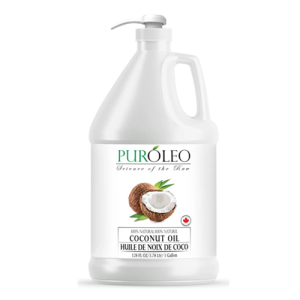
Puroleo Coconut Oil
If you are looking for a premium cold-pressed coconut oil that covers the skincare, haircare, and medium-heat cooking uses we compared above, Puroleo delivers 100% pure oil with no additives. Its quality profile makes it particularly well-suited for the beauty and wellness applications where virgin coconut oil outperforms refined.
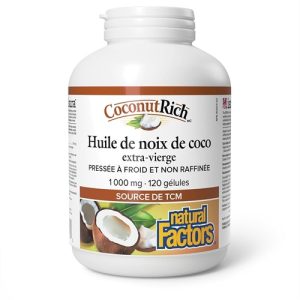
Huile de Noix de Coco
For everyday cooking and basic body care at a more accessible price point, this pure coconut oil delivers solid quality without the premium cost. It is a practical choice if you go through coconut oil quickly in the kitchen and want to keep your budget in check while still using a natural, additive-free product.
Use-Case Matchup: Which Oil Wins for Each Purpose
Now for the part most articles leave out — specific, actionable « buy this one if » recommendations for every common use case. No hedging, no « it depends without further explanation. » Let us settle this clearly.
Oil Pulling → Buy Cold-Pressed Virgin
Oil pulling involves swishing oil in your mouth for 15-20 minutes. You want the highest lauric acid content and the most antimicrobial compounds possible. Virgin coconut oil retains more of these than refined. The coconut flavor also makes the experience more pleasant than a neutral-tasting oil. Use about 1 tablespoon.
Deep Frying → Buy Refined
Deep frying requires sustained temperatures of 350-375 degrees Fahrenheit. Virgin coconut oil will hit its smoke point at the low end of that range and start degrading. Refined coconut oil handles deep frying comfortably with its 400-degree smoke point. It also will not impart a coconut flavor to your fried foods, which is usually what you want.
Hair Mask → Buy Cold-Pressed Virgin
The research on coconut oil reducing hair protein loss was conducted with virgin coconut oil. The higher lauric acid content and retained phytonutrients make it the clear choice for hair treatments. Apply 1-2 tablespoons from mid-shaft to ends, leave 30 minutes to overnight, then shampoo out.
Body Moisturizer → Buy Cold-Pressed Virgin
For skin application, you want the antioxidants and the full nutrient profile that cold-pressing preserves. The coconut scent is also generally a plus for body care. Apply a small amount to damp skin after showering.
Baking → Either Works (Preference-Based)
If you want a subtle coconut flavor in your banana bread or granola, use virgin. If you want a neutral fat that behaves like vegetable shortening, use refined. Both work at baking temperatures, so this comes down to taste preference.
Stir-Frying → Buy Refined
Stir-frying typically happens at 375-400 degrees Fahrenheit. Refined coconut oil handles this range without smoking. It also will not compete with the flavors of your garlic, ginger, and soy sauce. Virgin would smoke and add an unwanted sweetness.
The pattern is straightforward: cold-pressed virgin for anything that touches your body or goes in your mouth at low temperatures. Refined for anything involving high heat. Once you internalize that rule, shopping becomes simple.
Flavor and Aroma: What to Expect From Each
This might sound like a minor point, but flavor and aroma differences drive more purchasing decisions than people admit. If you buy cold-pressed coconut oil expecting a neutral fat and then find your scrambled eggs taste like a tropical cocktail, you are going to be disappointed.
Cold-pressed virgin coconut oil has a distinct, medium-intensity coconut flavor and a noticeable tropical aroma. It is pleasant in most contexts — smoothies, baked goods, curry bases, body application — but it can clash with savory dishes that do not pair well with sweetness. Think eggs, grilled meats, or pasta sauces.
Refined coconut oil is virtually flavorless and odorless. It behaves like a neutral cooking fat, similar to vegetable oil or shortening. This makes it versatile in the kitchen but less interesting for body care — part of the appeal of coconut oil on the skin is that pleasant natural scent.
💡 Good to Know: If you love the idea of coconut oil for cooking but find the flavor too strong, try using virgin coconut oil only for dishes where coconut complements the flavor profile (Thai curry, sweet potato hash, tropical smoothies) and refined for everything else. This gives you the best of both worlds without flavor conflicts.
For hair and skin, the aroma of virgin coconut oil is generally considered a benefit — it gives your hair and skin a naturally pleasant scent without adding synthetic fragrances. However, some people find it too strong for overnight hair treatments. If that describes you, refined coconut oil for hair masks is a perfectly reasonable compromise, even if it is slightly less effective from a nutrient standpoint.
Price Versus Value: When the Premium Is Worth It
Let us talk money, because the price difference between cold-pressed virgin and refined coconut oil can be substantial — sometimes three to five times more per ounce.
| Use Case | Volume Used Monthly | Recommended Type | Worth the Premium? |
|---|---|---|---|
| Daily cooking (sauteing, baking) | 16-32 oz | Refined or Virgin | No — refined is equally effective for heat |
| Deep frying | 32+ oz | Refined only | No — virgin should not be used here |
| Hair treatments (2x/week) | 4-8 oz | Cold-pressed virgin | Yes — measurably better for hair health |
| Body moisturizer (daily) | 4-6 oz | Cold-pressed virgin | Yes — antioxidant content matters for skin |
| Oil pulling (daily) | 8-12 oz | Cold-pressed virgin | Yes — lauric acid content is the whole point |
The practical takeaway: if you primarily cook with coconut oil and go through a lot of it, buying refined saves real money without sacrificing cooking quality. If you primarily use it for body care and hair, the premium for cold-pressed virgin is justified by measurably better results. If you do both, consider keeping two jars — a large refined one for the kitchen and a smaller virgin one for your bathroom.
For those who want premium quality without the guesswork, explore what we carry at Dulson Sante — our coconut oils are selected specifically for purity and multi-use versatility.
How to Read Labels and Avoid Marketing Traps
The coconut oil market has its share of misleading labels. Here is what to watch for so you get what you are actually paying for.
Label-Reading Checklist
- « Extra-virgin » coconut oil: This is a marketing term, not a regulated standard. Unlike olive oil, there is no official distinction between « virgin » and « extra-virgin » for coconut oil. Do not pay more just for the word « extra. »
- « Cold-pressed » without temperature claims: Some brands say « cold-pressed » but process at temperatures up to 150 degrees Fahrenheit. True cold-pressing should stay below 120 degrees Fahrenheit. Look for brands that state their processing temperature or are certified by third-party auditors.
- « Pure » or « 100% coconut oil »: This alone does not tell you whether it is virgin or refined. Always look for the processing method on the label.
- « Organic » certification: This tells you about farming practices (no synthetic pesticides) but not about processing quality. Organic refined coconut oil still goes through bleaching and deodorizing.
- Ingredient list: It should say one thing: coconut oil (Cocos nucifera). If you see any other ingredients — fragrances, preservatives, blending oils — put it back.
⚠️ Important: Be cautious with coconut oil labeled « liquid » or « fractionated. » These products have had their long-chain fatty acids removed, which means most of the lauric acid is gone. They stay liquid at room temperature and absorb quickly into skin — useful for some applications — but they lack the primary compound that makes coconut oil special for hair and immune support research.
Communities like r/SkincareAddiction on Reddit regularly discuss brand comparisons and label claims. Real user feedback often surfaces issues that professional reviews miss — like brands that changed their sourcing quietly or products that arrive with off-putting smells. That kind of crowd-sourced quality control is worth paying attention to.
Mistakes People Make When Choosing Coconut Oil
After spending a lot of time with coconut oil — both as a product we carry and as something our team uses personally — here are the errors we see most often.
🚨 Caution: Using virgin coconut oil in a deep fryer is a waste of money at best and a safety concern at worst. When any oil reaches its smoke point, it begins breaking down and releasing acrolein and other potentially harmful compounds. Always use refined coconut oil for temperatures above 350 degrees Fahrenheit.
Mistake #1: Assuming more expensive always means better. A $50 jar of artisanal virgin coconut oil and a $20 jar of certified organic virgin coconut oil from a reliable brand may be chemically identical. Pay for quality standards, not fancy packaging.
Mistake #2: Buying refined for hair treatments. Refined coconut oil still works on hair, but you are paying for a product and then stripping away the compounds that make it most effective. If hair health is your goal, spring for virgin — even a small jar lasts a long time since you only need 1-2 tablespoons per treatment.
Mistake #3: Storing coconut oil in the refrigerator. This makes it rock-hard and difficult to scoop. Room temperature storage in a cool, dark place is ideal. If your house runs warm (above 76 degrees Fahrenheit), the oil will be liquid most of the time — that is fine and does not indicate spoilage.
Mistake #4: Throwing away coconut oil that has melted and re-solidified. Coconut oil can cycle between solid and liquid states many times without degrading. This is normal physics, not a quality problem. Only discard it if it develops an off smell, discoloration, or mold.
Mistake #5: Buying coconut oil blends without realizing it. Some products labeled « coconut oil » are actually blends with cheaper oils like palm kernel or sunflower. Always check the ingredient list — it should contain nothing but coconut oil.
Have Questions? Our Team Can Help →
Benefits and Honest Trade-Offs of Each Type
Let us put both types side by side one final time — this time focusing on the real-world advantages and limitations you will experience as a user.
Cold-Pressed Virgin — Strengths
- Highest lauric acid content for hair and skin benefits
- Retains natural antioxidants, polyphenols, and phytonutrients
- Pleasant natural coconut aroma — no synthetic fragrances needed
- Best choice for oil pulling, body care, and hair masks
- No chemical solvents used in production
- Suitable for medium-heat cooking and baking
Cold-Pressed Virgin — Limitations
- Higher price point — up to 3-5 times more expensive per ounce
- Lower smoke point limits high-heat cooking
- Strong coconut flavor does not suit all recipes
- Not ideal for deep frying or stir-frying
Regular Refined — Strengths
- Higher smoke point — safe for stir-frying and deep frying
- Neutral flavor works in any recipe
- Significantly more affordable for high-volume use
- Same long shelf life as virgin
- Core fatty acid profile largely preserved
Regular Refined — Limitations
- Lower antioxidant and polyphenol content
- Slightly less lauric acid than virgin
- Less effective for hair protein loss prevention
- No natural coconut aroma — less appealing for body care
- Processing involves bleaching and deodorizing
Our Practical Recommendation
After everything we have covered, here is what we genuinely recommend — not as salespeople, but as people who use these products ourselves and want you to get the best results for your money.
💡 The Two-Jar Strategy: Keep a large container of refined coconut oil in the kitchen for everyday cooking, and a smaller jar of cold-pressed virgin coconut oil in the bathroom for hair treatments, body moisturizing, and occasional medium-heat cooking where you want that coconut flavor. This approach maximizes both value and results.
If you can only buy one, here is the decision tree:
- Primarily cooking? → Buy refined. It handles everything in the kitchen and saves money.
- Primarily hair and skin? → Buy cold-pressed virgin. The nutrient difference matters for body care.
- Both, roughly equal? → Buy cold-pressed virgin for its versatility. You can cook with it at medium heat, and it works for all body care applications. Just avoid using it for deep frying or high-heat stir-frying.
Whatever you choose, the most important factor is purity. Whether virgin or refined, make sure the only ingredient is coconut oil and that it comes from a source you trust. At Dulson Sante, every oil we carry meets that standard — because we believe simple, pure ingredients should not require a chemistry degree to evaluate.

Frequently Asked Questions
Is cold-pressed coconut oil worth the extra cost?
It depends on how you use it. For hair treatments, body moisturizing, and oil pulling, yes — the higher lauric acid and antioxidant content justify the premium. For high-volume cooking, especially at high heat, no — refined coconut oil performs equally well or better and costs significantly less. The two-jar approach we outlined above is the most cost-effective strategy for people who use coconut oil for multiple purposes.
Can refined coconut oil be used on skin?
Yes, it can. It will still moisturize and create an occlusive barrier on the skin. However, it contains fewer antioxidants and polyphenols than virgin coconut oil, so you are getting less of the protective compounds that may benefit skin health. If you already have a jar of refined coconut oil and want to try it on dry skin, go ahead — just know that virgin would deliver a bit more. Browse our natural oil selection to find options suited to body care.
Does coconut oil go bad?
Both types have a shelf life of approximately two years when stored properly in a cool, dark place with the lid sealed. Signs of spoilage include a rancid or sour smell, yellow discoloration (virgin should be white when solid), or any visible mold. Coconut oil that has melted and re-solidified repeatedly is not spoiled — that is just normal temperature behavior. Trust your nose over the texture.
What does « expeller-pressed » mean compared to « cold-pressed »?
Expeller-pressed means the oil was mechanically extracted without chemical solvents, but the process generates heat from friction — sometimes reaching 200 degrees Fahrenheit or higher. Cold-pressed means the same mechanical extraction but at controlled lower temperatures, typically below 120 degrees Fahrenheit. The lower temperature in cold-pressing preserves more heat-sensitive nutrients. Both are better than solvent-extracted, but cold-pressed retains the most nutritional value.
Is organic coconut oil always better than non-organic?
Organic certification tells you that the coconuts were grown without synthetic pesticides or fertilizers. This is a meaningful distinction if farming practices matter to you. However, organic status does not tell you anything about how the oil was processed — you can have organic refined coconut oil that has been bleached and deodorized. Always check both the organic certification AND the processing method. For the best quality, look for organic, cold-pressed, virgin coconut oil.
« Virgin coconut oil, obtained from fresh coconut meat through mechanical or natural means with or without the application of heat, retains a higher proportion of biologically active compounds including polyphenols and tocopherols compared to refined coconut oil. »
— Marina et al., International Food Research Journal, 2009
🌿 Explore Our Natural Products →
⚠️ Disclaimer: The information in this article is provided for educational purposes only and does not constitute medical advice. Always consult a qualified healthcare professional before starting any supplement or making changes to your health routine. Individual results may vary. These statements have not been evaluated by the Food and Drug Administration. This product is not intended to diagnose, treat, cure, or prevent any disease.