
Whey Protein vs Mass Gainer: Which One Matches Your Goal Best?
One delivers lean protein with minimal extras. The other packs in calories for maximal growth. Choosing wrong does not just waste money — it can push you further from your goal. Here is how to pick the right one.
In This Article
- The Core Difference Most People Overlook
- What the Numbers Actually Mean
- The Goal-Matching Framework
- Macro Breakdown Compared Side by Side
- Signs You Are Using the Wrong Product
- How to Fit Each One Into Your Daily Nutrition
- What to Look for on the Label
- Common Mistakes That Stall Progress
- Benefits and Honest Trade-Offs
- Making the Final Call Based on Your Situation
- Frequently Asked Questions
Walk into any supplement store or scroll through any fitness forum, and you will find the same question asked a thousand different ways: should I use whey protein or a mass gainer? The answers you get are usually surface-level — « whey is for cutting, mass gainer is for bulking » — which oversimplifies a decision that actually depends on your specific body type, training phase, and daily calorie math.
Here is the honest truth: neither product is inherently better. A mass gainer in the hands of someone who needs it is a tool for efficient progress. That same mass gainer in the hands of someone who does not need the extra calories is just expensive fat gain waiting to happen. And a whey protein isolate might be perfect for one person’s cut while being completely insufficient for another person’s hard bulk. Context is everything.
This article gives you a practical framework for matching the right product to your actual goal — with real calorie and protein math, body type considerations, and the kind of detail that goes beyond surface-level macro comparisons. At Dulson Sante, we believe in helping you make informed decisions, not just selling you what is popular.

The Core Difference Most People Overlook
ℹ️ Did You Know: A standard whey protein serving delivers around 24-30g of protein with 100-150 calories. A typical mass gainer serving can deliver 50-60g of protein with 600-1200+ calories. The calorie difference is not a minor detail — it fundamentally changes who each product is designed for.
At its core, the difference between whey protein and a mass gainer is not just about protein content. It is about caloric density and macronutrient ratio. Whey protein is a concentrated dietary supplement that delivers protein with minimal carbohydrates and fat. A mass gainer is a calorie-dense formula that combines protein with large amounts of carbohydrates (and sometimes fat) to help users reach a significant caloric surplus.
Think of it this way: whey protein is a precision tool. It adds protein to your diet without significantly changing your overall calorie intake. A mass gainer is a blunt instrument — effective when you genuinely need a large caloric surplus, but counterproductive when you do not.
The mistake most people make is choosing based on marketing or price rather than doing the actual math on what their body needs. That math is simpler than you think, and we will walk through it step by step.
What the Numbers Actually Mean
Before comparing specific products, you need to understand the numbers that actually matter for your decision. These are not complicated, but they are specific to you.
Your Maintenance Calories
This is the number of calories you burn in a day at your current activity level. For most recreationally active adults, it falls somewhere between 2,200 and 3,200 calories. Online calculators can give you a rough estimate, but tracking your food and weight for two weeks gives a more accurate picture.
Your Caloric Target
If you are cutting (losing fat while preserving muscle), you need to eat below maintenance — typically 300-500 calories below. If you are lean bulking (gaining muscle with minimal fat), you aim for 200-400 above. If you are on a hard bulk (maximizing weight gain, accepting some fat), 500-1000+ above.
Your Protein Target
Research consistently points to 1.6 to 2.2 grams of protein per kilogram of body weight per day for muscle-building goals. For a 180-pound (82 kg) person, that is roughly 130-180 grams of protein daily.
1.6-2.2g
Protein per kg body weight for muscle goals
200-500
Calorie surplus range for lean to moderate bulking
300-500
Calorie deficit range for cutting with muscle retention
Once you know these three numbers — your maintenance, your target, and your protein need — the whey-vs-gainer decision almost makes itself. If you are already close to your calorie target from food and just need more protein, whey wins. If you are struggling to eat enough total calories to support growth, a mass gainer fills the gap efficiently.
The Goal-Matching Framework
Here is the decision framework we recommend. It accounts for your current training phase, body type, and how much you are already eating from whole food.
Step 1: Identify Your Training Phase
Cutting: You are in a caloric deficit to lose fat. Every calorie counts, so you want maximum protein with minimum extra calories. Whey protein wins here clearly. A mass gainer during a cut would blow your calorie budget on carbs you do not need.
Step 2: Assess Your Appetite and Eating Capacity
Lean bulk with good appetite: If you can comfortably eat 2,800-3,200 calories from whole food, you likely just need 1-2 whey shakes per day to hit your protein target. The extra calories from food are cleaner and more nutrient-dense. Whey protein is usually the better fit.
Step 3: Consider Your Body Type and Metabolism
Hard bulk or naturally lean with fast metabolism: If you are a classic ectomorph who struggles to eat more than 2,500 calories and needs 3,500+ for growth, eating enough from whole food alone may feel like a full-time job. A mass gainer adds 600-1,000+ calories in a single shake. This is where mass gainers earn their place.
Step 4: Check Your Current Protein Intake
If you are already getting 80%+ of your protein from food and just need a small top-up, a simple whey isolate is efficient and cost-effective. If you are falling short on both protein and total calories, a mass gainer addresses both in one product.
💡 Good to Know: There is no shame in using a mass gainer if you genuinely need the calories. The fitness community sometimes treats mass gainers as a « lazy » option, but for naturally thin people with fast metabolisms, they can be the difference between spinning your wheels and actually making progress. The key is needing those extra calories — not just wanting a thicker shake.
Match Your Goal With the Right Product
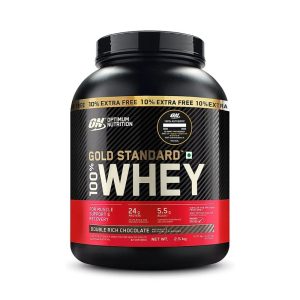
Proteine Whey Gold Standard 2.5 kg
If your goal-matching framework pointed toward lean protein with minimal extras, this is the kind of product that fits. Gold Standard Whey delivers a high-quality amino acid profile per serving without loading in unnecessary calories — making it well-suited for cutting phases, lean bulks, or anyone who needs a protein boost without blowing their caloric budget.
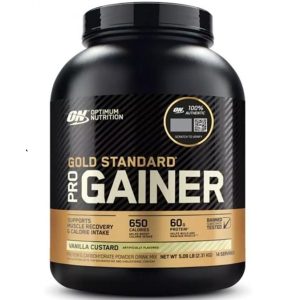
Optimum Nutrition Gold Standard Pro Gainer
For those whose assessment pointed toward the caloric surplus path — especially naturally lean individuals who struggle to eat enough — Pro Gainer delivers 650 calories per serving with a balanced protein-to-carb ratio. It is designed for hard gainers and people in serious bulking phases who need caloric density without having to force-feed themselves whole food at every meal.
Macro Breakdown Compared Side by Side
Numbers tell the real story. Here is a typical serving comparison between a standard whey protein and a standard mass gainer, using representative values from quality products in each category.
| Per Serving | Whey Protein (1 scoop) | Mass Gainer (1 full serving) |
|---|---|---|
| Calories | 120-150 | 600-1200 |
| Protein | 24-30g | 50-60g |
| Carbohydrates | 2-5g | 80-170g |
| Fat | 1-3g | 8-20g |
| Sugar | 1-2g | 15-40g |
| Serving Size | 30-35g (1 scoop) | 150-330g (2-4 scoops) |
| Cost Per Serving | $1.00-$2.00 | $3.00-$6.00 |
| Best For | Cutting, lean bulk, protein top-up | Hard bulk, fast metabolism, calorie surplus |
A few things jump out from this comparison. First, the calorie difference is enormous — a mass gainer can deliver 4-10 times the calories of a whey shake. If you are not in a significant caloric deficit relative to your growth needs, those extra calories will be stored as fat, not muscle. Second, the carbohydrate content in mass gainers is very high. For people who already eat enough carbs from food, this is redundant. For people who genuinely cannot eat enough, it fills a real gap.
Members of r/fitness on Reddit frequently debate this comparison. The general consensus that has emerged over years of community discussion is practical: calculate your calorie and protein needs from food first, then fill whatever gap remains with the appropriate supplement. It is math, not brand loyalty.
Signs You Are Using the Wrong Product
If you have been using a protein supplement for a few months and your progress does not match your expectations, you might simply be using the wrong product for your current phase. Here is how to tell.
Signs Whey Protein Is Not Enough
- You are consistently falling 500+ calories short of your bulking target despite eating whole meals
- The scale is not moving despite progressive overload and adequate sleep
- You feel constantly full and struggle to eat enough during the day
- Your recovery feels slow even though your protein intake seems adequate
Signs a Mass Gainer Is Too Much
- You are gaining weight, but your waistline is growing faster than your muscles
- You feel bloated or sluggish after your shake
- Your body fat percentage is increasing alongside your muscle gains
- You could easily hit your calorie target from food alone if you skipped the shake
⚠️ Important: Rapid weight gain — more than 1-1.5 pounds per week for intermediate lifters — is almost always fat gain, not muscle. If the scale is climbing faster than that while using a mass gainer, you are likely in too large a surplus. Adjust your serving size or switch to whey to reduce caloric excess while maintaining protein intake.

How to Fit Each One Into Your Daily Nutrition
Once you have chosen your product, the next question is when and how to use it within your actual eating pattern. Here is what works best for each.
Whey Protein: Flexible and Efficient
Whey protein fits almost anywhere in your day. Common approaches include post-workout for recovery (the most traditional timing), with breakfast to boost morning protein intake, or as a snack between meals. Since the calorie load is low, it will not interfere with your appetite for whole food meals.
A practical pattern for someone on a lean bulk: whole food breakfast with eggs, whey shake mid-morning or post-workout, whole food lunch, whole food dinner, optional whey shake before bed with casein or milk for slower digestion overnight.
Mass Gainer: Strategic Placement Matters
A 600-1000+ calorie shake is a significant dietary event. Timing it poorly — like right before a whole food meal — can tank your appetite and make the rest of your eating day miserable. Most people do best with their mass gainer shake at one of two windows: as a mid-morning meal replacement (between breakfast and lunch), or post-workout when appetite and nutrient uptake are both elevated.
Lean Bulk with Whey (Example Day)
Breakfast: eggs + oats (500 cal). Mid-morning: whey shake + banana (280 cal). Lunch: chicken + rice + vegetables (600 cal). Post-workout: whey shake + peanut butter (320 cal). Dinner: salmon + sweet potato (650 cal). Total: ~2,350 cal, ~170g protein.
Hard Bulk with Mass Gainer (Example Day)
Breakfast: eggs + toast + avocado (550 cal). Mid-morning: mass gainer shake (650 cal). Lunch: beef + pasta + olive oil (700 cal). Post-workout: whey shake + fruit (250 cal). Dinner: chicken thigh + rice + vegetables (600 cal). Total: ~2,750 cal, ~185g protein.
The point is not to copy these exact meals — it is to see how each product type slots into different caloric targets. If you need help calculating your specific numbers, our team can walk you through it.
Complete Your Fitness Setup
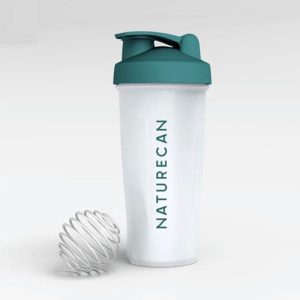
Naturecan Water Bottle / Shaker
Whether you are mixing whey protein post-workout or blending a mass gainer shake mid-morning, a quality shaker makes the process smoother and more portable. This Naturecan bottle does double duty as a water bottle for hydration between sets and a protein shaker when you need it — one less thing to carry to the gym.
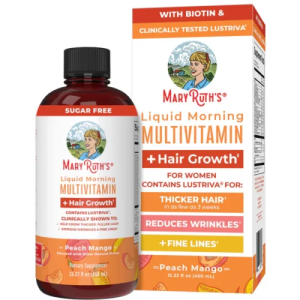
Liquid Morning Multi Vitamin
Hard training increases micronutrient demands — magnesium, zinc, B vitamins, and vitamin D all get depleted faster when you exercise regularly. A daily liquid multivitamin may help fill those gaps that neither whey protein nor a mass gainer is designed to address. Think of it as the nutritional base layer underneath your protein supplementation.
What to Look for on the Label
Not all protein supplements are created equal. The label tells you a lot about what you are actually getting — if you know where to look.
Whey Protein Label Checklist
- Protein should be the first ingredient listed (whey protein isolate or concentrate)
- At least 24g of protein per 30-35g serving — anything less means significant fillers
- Low sugar content (under 3g per serving) unless flavored
- Amino acid profile should include leucine content of 2-3g per serving (key for muscle protein synthesis)
- Third-party tested or Informed Sport certified for quality assurance
Mass Gainer Label Checklist
- Protein-to-calorie ratio should be reasonable — at least 40-60g protein per 600+ calorie serving
- Carbohydrate sources should include complex carbs (maltodextrin is common but not ideal as the sole source)
- Check sugar content — some mass gainers hide 40-60g of sugar per serving behind the « high calorie » label
- Added vitamins and minerals are a plus, as they may offset micronutrient dilution from heavy carb loading
- Serving size should be realistic — some products list a 300g+ serving that nobody actually uses
One thing worth noting: the cheapest products in both categories tend to use inferior protein sources, excessive fillers, and artificial sweeteners. The price difference between a quality whey and a bargain brand usually reflects real differences in protein quality, purity testing, and taste. You can explore our curated selection to see what quality labeling looks like in practice.
Common Mistakes That Stall Progress
These are the errors we see most often — and each one can be the difference between making gains and spinning your wheels.
🚨 Caution: If you have kidney disease or impaired kidney function, high-protein diets and protein supplements require medical supervision. For healthy adults, research consistently shows that protein intakes up to 2.2g/kg are safe. But pre-existing kidney conditions change the equation significantly. Always consult your healthcare provider.
Mistake #1: Using a mass gainer on a cut. This sounds obvious, but it happens more than you would think. Someone buys a mass gainer during their bulk, transitions to a cut, and keeps drinking the same shake out of habit. Those 650+ extra calories per serving can single-handedly erase a caloric deficit. Switch to whey when you switch phases.
Mistake #2: Counting supplement protein but not supplement calories. A mass gainer shake is a meal, not a snack. If you drink a 650-calorie shake and then eat a full meal an hour later, you are likely in a larger surplus than intended. Track the full shake as a meal in your daily calorie count.
Mistake #3: Relying on supplements instead of learning to cook. Whey and mass gainers are convenient, but whole food should still make up 70-80% of your calories. Real meals provide fiber, phytonutrients, and micronutrients that no powder can fully replicate. Supplements fill gaps — they do not build the foundation.
Mistake #4: Ignoring digestive tolerance. Mass gainers especially can cause bloating, gas, and digestive discomfort in people sensitive to lactose, large carbohydrate loads, or certain sweeteners. Start with half a serving and increase gradually. If digestive issues persist, try a different product or split the serving across the day.
Mistake #5: Not adjusting as your body changes. The product that was right for you three months ago may not be right today. As you gain weight, your maintenance calories increase. As you lose fat, your caloric needs decrease. Reassess your supplement choice every time you change training phases or reach a body composition milestone.

Benefits and Honest Trade-Offs
Both products have genuine value when used correctly. Here is an honest look at the benefits and limitations of each approach.
Benefits of Protein Supplementation
- Convenient way to meet protein targets when whole food alone falls short
- Whey protein isolate offers one of the highest-quality amino acid profiles available
- Mass gainers solve the genuine challenge of eating enough for hard gainers
- Both products have decades of research supporting their safety and efficacy for their intended use
- Flexible timing — can be used pre-workout, post-workout, or as meal supplements
Things to Consider
- Supplements cannot replace the nutritional complexity of whole food meals
- Mass gainers can cause rapid fat gain if calorie needs are overestimated
- Some products contain excessive sugar, artificial ingredients, or hidden fillers
- Digestive tolerance varies — lactose intolerance and bloating are common complaints
- Results depend entirely on training consistency and overall diet, not just the supplement itself
Making the Final Call Based on Your Situation
Let us bring everything together into a straightforward decision tree.
Choose Whey Protein If:
- You are cutting or in a caloric deficit
- You can reach your calorie target from food
- You mainly need a protein top-up, not extra calories
- You prefer flexible, low-calorie supplementation
- You are on a lean bulk and eat well already
Choose Mass Gainer If:
- You struggle to eat enough to gain weight
- You have a fast metabolism and naturally thin build
- You fall 500+ calories short of your bulking target daily
- You need caloric density and convenience combined
- You are in an intentional hard bulking phase
And here is a third option many people overlook: you can use both products at different times. Whey protein post-workout for targeted recovery. A mass gainer as a mid-morning meal when appetite is low. This hybrid approach gives you the best of both worlds — protein precision when you want it, caloric density when you need it.
Whatever you choose, track your progress for at least four weeks before making a change. Weight, body measurements, strength numbers in the gym, and how you look in the mirror are all useful data points. If you are moving in the right direction, the product is working. If not, revisit the framework and adjust.
Need help picking the right product for your specific goal? Reach out to our team at Dulson Sante — we are happy to walk through the decision with you. And if you want more training and nutrition guidance, the Dulson Sante blog covers these topics in depth.
Frequently Asked Questions
Can I mix whey protein into a mass gainer to increase the protein ratio?
Absolutely. This is actually a smart hack for people who want the caloric density of a mass gainer but find the protein-to-carb ratio too low. Adding one scoop of whey to a half-serving of mass gainer gives you more control over the macro breakdown. Just make sure you track the combined calories and macros accurately in your daily intake.
How much protein can your body absorb in one sitting?
The old claim that « your body can only use 30 grams of protein per meal » has been largely debunked by more recent research. A 2018 study in the Journal of the International Society of Sports Nutrition found that the body can utilize significantly more protein per meal — it just takes longer to digest and absorb larger doses. For practical purposes, 20-50g per meal is a reasonable range for most adults. Spreading protein across 3-5 meals per day is still optimal for maximizing muscle protein synthesis.
Do mass gainers cause fat gain?
Mass gainers do not cause fat gain by themselves — excess calories cause fat gain. If a mass gainer puts you in a surplus that is larger than what your body can use for muscle growth, the excess will be stored as fat. The product is the tool; the calorie math is what determines the outcome. Track your intake and adjust your serving size based on how your body responds over 2-4 week periods.
Is whey protein safe for people with lactose intolerance?
Whey protein isolate is heavily filtered and typically contains very little lactose — many lactose-intolerant individuals tolerate it well. Whey concentrate retains more lactose and may cause issues. If you are lactose sensitive, look specifically for whey isolate or hydrolysate. Alternatively, plant-based protein options (pea, rice, hemp blends) avoid dairy entirely. Start with a small serving to test your individual tolerance.
When should I switch from mass gainer to whey protein?
Switch when your body composition goals change — specifically when you transition from a bulking phase to a maintenance or cutting phase. Also switch if you notice your body fat increasing faster than your strength or muscle measurements. The mass gainer served its purpose during the surplus phase; whey maintains your protein intake while reducing the caloric load during leaner phases. You can see both options in our shop to compare.
« A daily protein intake of 1.6 g/kg body weight per day is sufficient to maximize resistance training-induced gains in fat-free mass in healthy adults. »
— Morton et al., British Journal of Sports Medicine, 2018
🌿 Explore Our Natural Products →
⚠️ Disclaimer: The information in this article is provided for educational purposes only and does not constitute medical advice. Always consult a qualified healthcare professional before starting any supplement or making changes to your health routine. Individual results may vary. These statements have not been evaluated by the Food and Drug Administration. This product is not intended to diagnose, treat, cure, or prevent any disease.