
How to Choose a Prostate Support Supplement for Long-Term Wellness
The prostate supplement market is crowded, confusing, and full of exaggerated claims. Here is the buyer education guide that puts you in control — so you spend wisely and actually get what the label promises.
In This Article
- Why Choosing a Prostate Supplement Feels So Confusing
- What the FDA Does and Does Not Regulate
- How to Read a Supplement Facts Panel Like a Pro
- Proprietary Blends vs. Transparent Labels: The Critical Difference
- Third-Party Testing: What the Certifications Actually Mean
- Clinically Relevant Doses vs. Pixie Dusting
- Realistic Timelines: When to Expect Results
- Red Flags That Should Make You Walk Away
- Benefits of Informed Supplement Shopping
- A Decision Framework You Can Use Today
- Frequently Asked Questions
Shopping for a prostate supplement should not feel like solving a puzzle. But for most men, it does. You stand in the supplement aisle — or scroll through dozens of online listings — and every product claims to be the best, the most advanced, the most scientifically backed. The marketing is polished. The reviews are suspiciously glowing. And the labels might as well be written in a different language.
The result? You either pick one at random, buy whatever your friend recommended, or give up entirely because the noise is too much. None of those outcomes serve you well. At Dulson Sante, we believe that an informed customer is a better customer — not just for us, but for the entire supplement industry. The more you know about what separates a quality product from a marketing facade, the better decisions you make.
This article is a genuine buyer education guide. We cover how to read supplement labels, what third-party testing certifications actually verify, the difference between proprietary blends and transparent labeling, what dosages the research actually supports, and how long you should realistically give a product before deciding if it is working. No sales pressure. Just the knowledge you need to choose with confidence.

Why Choosing a Prostate Supplement Feels So Confusing
The confusion is not your fault. It is a direct consequence of how the supplement industry is structured. Unlike pharmaceutical drugs, dietary supplements do not require pre-market approval from the FDA. This means anyone can formulate a product, slap a label on it, and start selling — without proving that the product works, that the doses are effective, or even that the bottle contains what the label claims.
ℹ️ Did You Know: A 2015 investigation by the New York State Attorney General found that 4 out of 5 store-brand herbal supplements tested at major retailers did not contain the botanical ingredients listed on their labels. Some contained fillers like rice powder and houseplants. This is why third-party verification matters so much.
Add to this the marketing arms race. Every brand uses similar language — « clinically formulated, » « doctor recommended, » « maximum strength, » « premium quality. » When everyone claims to be the best, the claims become meaningless noise. Communities like r/Supplements on Reddit are filled with men asking « which prostate supplement actually works? » and getting dozens of conflicting answers, each backed by someone’s personal experience or affiliate link.
The path through the confusion is education. Not brand loyalty, not price assumptions, not marketing persuasion — education. Once you know what to look for, the noise fades and the signal becomes clear.
What the FDA Does and Does Not Regulate
Let us clear up one of the most common misunderstandings in supplement shopping: the role of the FDA. Many consumers assume that if a supplement is sold legally in the United States, the FDA has verified its safety and effectiveness. That is not how it works.
What the FDA DOES Do
The FDA regulates dietary supplements under the Dietary Supplement Health and Education Act (DSHEA) of 1994. Under DSHEA, the FDA:
- Sets current Good Manufacturing Practices (cGMPs) that manufacturers must follow
- Can take action against adulterated or misbranded products after they are on the market
- Requires that supplement labels include a Supplement Facts panel
- Monitors adverse event reports submitted by consumers and manufacturers
- Can issue warning letters and recalls for products that violate regulations
What the FDA Does NOT Do
The FDA does not:
- Approve supplements for safety or efficacy before they go to market
- Verify that the ingredients listed on the label are actually in the bottle
- Test products independently before sale
- Approve or verify any health claims made in supplement marketing
- Require clinical trials proving a supplement works before it can be sold
⚠️ Important: The phrase « FDA approved » is misleading when applied to dietary supplements — the FDA does not « approve » supplements the way it approves drugs. If a brand claims its prostate supplement is « FDA approved, » that is a red flag and likely a violation of labeling regulations. The accurate statement is « manufactured in an FDA-registered facility » or « produced under cGMP conditions. »
This regulatory gap is precisely why third-party testing exists. Independent laboratories fill the verification role that the FDA does not perform pre-market. We will cover those certifications in detail in section 5.
How to Read a Supplement Facts Panel Like a Pro
The Supplement Facts panel is the single most important piece of information on any supplement bottle. It is standardized by the FDA and must include specific data points. Learning to read it takes five minutes — and it will change how you evaluate every supplement for the rest of your life.
Step 1: Check the Serving Size
Always start here. Some products list impressive-looking ingredient amounts per serving, but the serving size is 3 capsules. If you only take 1 capsule per day (as many people do with larger pills), you are getting one-third of the listed amounts. The math matters.
Step 2: Look for Individual Ingredient Amounts
Each ingredient should be listed with its specific amount in milligrams. If you see a « Prostate Support Blend: 750mg » followed by a list of ingredients without individual amounts, that is a proprietary blend (covered in detail in the next section). You cannot evaluate dosing accuracy without individual amounts.
Step 3: Identify the Ingredient Form
The form of an ingredient matters enormously. « Saw palmetto berry powder » and « saw palmetto liposterolic extract (85-95% fatty acids) » are not interchangeable. The extract is what clinical trials used. The powder may contain minimal active compounds. The Supplement Facts panel should specify the form — if it does not, that is a concern.
Step 4: Cross-Reference Doses With Research
For prostate ingredients, the research-backed daily doses are approximately: saw palmetto liposterolic extract 320mg, pygeum bark extract 75-200mg, zinc (picolinate or citrate) 15-30mg, and nettle root extract 300-600mg. If a product lists significantly lower amounts, you are not getting what the clinical trials tested.
Step 5: Scan the « Other Ingredients » Section
Below the Supplement Facts panel, you will find a list of inactive ingredients — fillers, binders, coatings, and flow agents used in manufacturing. Common acceptable ones include cellulose, rice flour, and magnesium stearate. Watch for artificial colors, titanium dioxide, and excessive fillers that suggest a cheaply made product.
According to regulatory guidance on dietary supplements, the Supplement Facts panel format is mandated by law, but the quality and completeness of the information within it varies dramatically between brands. Your ability to read it critically is your best defense.
Transparency in Practice
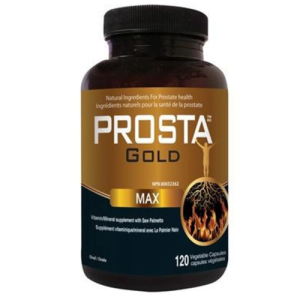
Prosta Gold
Everything we just covered about label reading — individual ingredient amounts, standardized extracts, relevant dosing — is what we look for in the products we carry at Dulson Sante. Prosta Gold combines saw palmetto, pygeum, and zinc into a clearly labeled formula designed for long-term prostate comfort. No proprietary blends. No hidden doses.
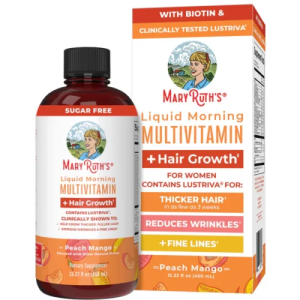
Liquid Morning Multi Vitamin
A solid nutritional foundation supports any targeted supplement you add. This liquid multivitamin provides essential vitamins and minerals in an easily absorbed format — a practical complement to a prostate-focused supplement, especially if your daily diet does not consistently cover all your nutritional bases.
Proprietary Blends vs. Transparent Labels: The Critical Difference
This is the single most important distinction in supplement label reading, and it is the hill we will die on: proprietary blends are a red flag. Not always a dealbreaker, but always a reason for caution.
🔒 Proprietary Blend
- Lists a total blend weight (e.g., « 750mg »)
- Lists ingredient names but NOT individual amounts
- Ingredients listed in descending order by weight
- Impossible to verify if individual doses are effective
- Often used to hide cheap filler-heavy formulas
🔓 Transparent Label
- Lists each ingredient with its exact amount
- Specifies extract type and standardization
- Allows you to compare doses to research
- Enables meaningful product comparison
- Demonstrates manufacturer confidence in their formula
Why Proprietary Blends Exist
The supplement industry’s stated reason for proprietary blends is « protecting trade secrets. » The cynical — and often accurate — interpretation is that proprietary blends allow manufacturers to use token amounts of expensive ingredients while padding the blend with cheap fillers. If a « Prostate Power Blend: 800mg » contains saw palmetto, pygeum, zinc, nettle, and five other ingredients, the math makes it nearly impossible for each ingredient to be at a clinically relevant dose. Eight hundred milligrams split eight ways is 100mg each — well below the researched dose for most prostate ingredients.
The Transparency Test
When evaluating a prostate supplement, ask one simple question: can I verify from the label that each key ingredient is present at its researched dose? If the answer is yes, the label is transparent. If the answer is no — either because doses are hidden in a proprietary blend or because extract standardization is not specified — the product fails the transparency test.
💡 Good to Know: A transparent label is not a guarantee of effectiveness, but an opaque label is a guarantee that you cannot evaluate effectiveness. Transparency is the minimum bar for trust — not the ceiling.
Third-Party Testing: What the Certifications Actually Mean
Since the FDA does not verify supplement contents pre-market, independent laboratories fill that role. Third-party testing is the closest thing consumers have to an objective guarantee that a product contains what it claims. But not all certifications are equal.
| Certification | What It Verifies | How Rigorous |
|---|---|---|
| USP Verified | Identity, potency, purity, dissolution; cGMP compliance | Gold standard — most comprehensive and rigorous |
| NSF International | Label accuracy, contaminant screening, cGMP audit | Very rigorous — widely respected by healthcare professionals |
| NSF Certified for Sport | Everything NSF does, plus banned substance screening | Top tier — primarily for athletes but useful trust signal |
| ConsumerLab | Independent testing of popular products; publishes reports | Reputable — but brands do not always opt into testing |
| « Lab Tested » (brand claim) | Varies — could mean in-house testing, limited panel | Low confidence — no standard definition or independent audit |
| « FDA Approved » (on supplements) | Nothing — this claim is misleading for supplements | Red flag — indicates misunderstanding or deception |
The practical takeaway: USP Verified and NSF International certifications mean something. « Lab tested » and « clinically formulated » without specific certification names mean very little. When comparing two similar products at similar price points, the one with a recognized third-party certification has objectively demonstrated a higher level of quality commitment.
Clinically Relevant Doses vs. Pixie Dusting
« Pixie dusting » is the supplement industry’s term for including a headline ingredient at a dose too low to produce any meaningful effect. The ingredient appears on the label — which is all the marketing team needs — but the amount is a fraction of what clinical trials actually used. It is legal. It is common. And it is one of the most widespread ways consumers get shortchanged.
The math is simple. If a clinical trial found benefits at 320mg of saw palmetto liposterolic extract, and your supplement contains 50mg of saw palmetto berry powder, you are getting less than one-sixth of the studied dose in a potentially less effective form. The ingredient name on the label looks the same. The experience in your body will not be.
This is why cross-referencing label doses against published research is not optional — it is essential. The table in our ingredient guide article provides the reference doses for all major prostate support ingredients.
Products That Value Transparency
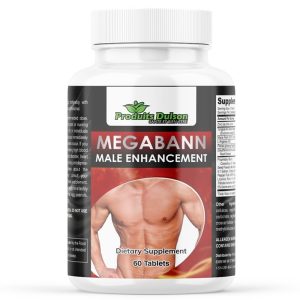
Megabann Male Enhancement
The label literacy skills we have been building in this article apply to every supplement category, not just prostate health. Megabann Male Enhancement uses a transparent formula designed to support male vitality and endurance naturally. For men addressing prostate comfort alongside broader wellness goals, it may complement a prostate-focused supplement as part of a well-rounded routine.
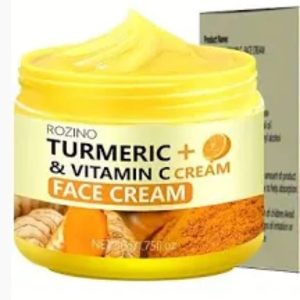
Rozino Turmeric
Anti-inflammatory support is relevant to both prostate comfort and overall wellness. Rozino Turmeric provides curcumin — one of the most researched natural anti-inflammatory compounds — as a complementary option for men who want to address inflammation alongside their targeted prostate support. It is the kind of layered approach that informed supplement users tend to build over time.

Realistic Timelines: When to Expect Results
One of the most frequent questions men ask — and one of the most poorly answered by the supplement industry — is « how long until this works? » The honest answer is not what most marketing wants you to hear, but it is what you need to know to set fair expectations.
8-12 Weeks
Minimum consistent daily use before evaluating prostate supplement effectiveness — based on clinical trial design timelines
Why Results Take Time
Prostate supplements work through gradual biological mechanisms — inhibiting DHT conversion, reducing tissue inflammation, supporting cellular health. These processes do not switch on like a light. They accumulate over weeks, and the tissue-level changes need time to translate into symptom improvement that you can feel.
A Realistic Timeline
| Timeframe | What to Expect |
|---|---|
| Week 1-2 | No noticeable changes for most men — this is normal |
| Week 3-4 | Some men begin to notice subtle differences in nighttime frequency |
| Week 6-8 | More consistent improvement in urinary flow and urgency for responders |
| Week 10-12 | Full evaluation point — if no improvement, discuss alternatives with your doctor |
| Month 4-6 | Continued use may consolidate benefits; some studies show progressive improvement |
If a supplement promises noticeable results in 3-5 days, that is a marketing claim, not a biological reality. Prostate tissue does not change that fast. Any supplement making such promises is prioritizing your impulse purchase over your informed decision.
Red Flags That Should Make You Walk Away
Now that you know what good looks like, here are the signs that a product is not worth your money or your trust.
🚨 Caution: If a prostate supplement uses language like « shrinks the prostate, » « cures BPH, » « eliminates urinary problems, » or « guaranteed results, » it is making disease claims that violate FDA regulations. These claims are not just misleading — they are illegal under DSHEA. A company willing to break labeling laws may be willing to cut corners elsewhere.
Walk-Away Red Flags
- Proprietary blend hiding individual ingredient doses
- « FDA approved » claim on a dietary supplement
- Disease claims: « cures, » « treats, » « prevents, » « diagnoses »
- Before/after testimonials claiming dramatic results
- No physical address or contact information for the manufacturer
- Prices dramatically lower than comparable products (may indicate under-dosing or quality shortcuts)
- « Doctor recommended » without naming a real, verifiable doctor
- Fake reviews or suspiciously uniform 5-star ratings
- Auto-ship enrollment buried in fine print
- Claims of « instant results » or « feel the difference in 24 hours »
Not every product with one of these flags is necessarily bad, but the accumulation of red flags should lower your confidence. A quality product with transparent labeling, proper certifications, and honest marketing does not need to rely on these tactics.

Benefits of Informed Supplement Shopping
Taking the time to educate yourself about supplement quality is not just about one purchase. It changes how you approach wellness products for the rest of your life. Here is what being an informed buyer actually gets you.
Benefits of Label Literacy
- You stop wasting money on under-dosed or mislabeled products
- You can confidently compare products based on substance, not marketing
- You set realistic expectations based on research, not hype
- You protect yourself from potentially harmful or adulterated supplements
- You become a better advocate in conversations with your healthcare provider
- You can evaluate new products independently as they enter the market
Honest Considerations
- Even well-formulated supplements are not guaranteed to work for every individual
- Quality supplements tend to cost more than low-quality alternatives
- Label literacy does not replace medical evaluation for significant symptoms
- The research on many natural ingredients is still evolving and sometimes contradictory
- No supplement can substitute for fundamental lifestyle factors like sleep, diet, and exercise
Our philosophy at Dulson Sante is straightforward: we would rather you be a knowledgeable customer who chooses our products because you understand their value than an uninformed buyer who picks us by accident. Reach out to our team if you have questions about any product in our collection — we are always happy to discuss ingredients, dosing, and how products fit into your wellness approach.
A Decision Framework You Can Use Today
To bring everything together, here is a step-by-step framework you can apply to any prostate supplement — ours or anyone else’s. Print it, save it, use it every time you evaluate a product.
Step 1: Check for Transparent Labeling
Does the Supplement Facts panel list individual ingredient amounts, or does it hide behind a proprietary blend? If individual doses are not listed, move on.
Step 2: Verify Extract Forms
Are key ingredients (saw palmetto, pygeum, nettle) listed as standardized extracts with percentages? « Berry powder » is not the same as « liposterolic extract, 85-95% fatty acids. »
Step 3: Compare Doses to Research
Cross-reference labeled doses against clinical trial doses. Saw palmetto at 320mg liposterolic extract, pygeum at 75-200mg, zinc at 15-30mg, nettle root at 300-600mg. Are the numbers in the right range?
Step 4: Look for Third-Party Verification
USP Verified or NSF International certifications are the gold standard. « Lab tested » without a named certifying body provides limited assurance.
Step 5: Evaluate the Brand
Does the company provide clear contact information? Do they make honest, conditional claims rather than disease claims? Do they disclose sourcing and manufacturing practices?
Step 6: Set Your Evaluation Timeline
Commit to 8-12 weeks of consistent daily use before judging results. Track your symptoms weekly using a simple diary or the International Prostate Symptom Score (IPSS) questionnaire.
✅ Final Thought: The best prostate supplement is the one that contains what it claims, at doses that research supports, from a company that earns your trust through transparency — and that you take consistently enough to give it a fair chance. Everything else is noise.
Explore Wellness Products You Can Trust
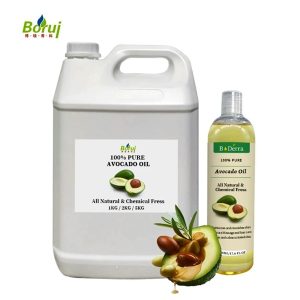
Avocado Oil
The decision-making skills you built in this article apply to every wellness product, not just supplements. Our pure avocado oil is a versatile kitchen staple rich in healthy monounsaturated fats — the same type of fats that improve absorption of fat-soluble nutrients and support anti-inflammatory dietary patterns we discuss across our prostate health articles.

Insulated Bottle
A quality supplement routine works best alongside consistent daily habits — including proper hydration. This insulated tumbler keeps your water at your preferred temperature throughout the day, making it easier to implement the fluid timing strategies that complement prostate support supplements for long-term comfort.
Frequently Asked Questions
Is a more expensive prostate supplement always better?
Not necessarily. Price reflects ingredient quality, manufacturing standards, testing, and marketing — not all of those correlate with effectiveness. A $30 supplement with transparent labeling and clinically relevant doses can outperform a $70 product hiding behind a proprietary blend. Evaluate the label first, then consider price in the context of what you are actually getting per serving.
Can I take a prostate supplement alongside prescription BPH medication?
This depends on the specific supplement and medication. Some combinations — like saw palmetto with finasteride — target similar pathways and may interact. Others are generally considered safe to combine. This is a conversation to have with your prescribing doctor or pharmacist, who can review the specific ingredients and doses relative to your medications. Never combine supplements with prescription drugs without professional guidance.
How do I know if a supplement is actually working?
The most reliable method is tracking your symptoms before and during use. The International Prostate Symptom Score (IPSS) is a simple 7-question questionnaire used in clinical trials — you can find it online and score yourself monthly. A decrease of 3 or more points is generally considered clinically meaningful. Additionally, tracking nighttime bathroom trips in a simple diary gives you concrete data rather than vague impressions. You can visit our blog for more guidance on tracking your wellness progress.
What if I have tried a prostate supplement and it did not work?
First, verify that you gave it adequate time (minimum 8-12 weeks) and used it consistently every day. Second, check whether the product contained clinically relevant doses of standardized extracts — if not, the product may have been inadequate, not the ingredients. If you used a well-formulated product consistently for 3 months without improvement, it is time to discuss your symptoms with a healthcare provider for a more targeted evaluation.
Should I cycle prostate supplements or take them continuously?
Most clinical research on prostate ingredients evaluates continuous daily use over months to years. There is currently no strong evidence suggesting that cycling (taking breaks) improves outcomes. In fact, the benefits of saw palmetto and pygeum appear to require sustained use — stopping often means a gradual return of symptoms. Unless your healthcare provider advises otherwise, consistent daily use is the approach best supported by the research.
« Consumers should be advised to look for evidence of third-party quality verification, transparent ingredient labeling, and clinically evaluated doses when selecting botanical supplements for benign prostatic hyperplasia management. »
— Journal of the American Pharmacists Association, Review of OTC Prostate Supplements, 2021
🌿 Explore Our Natural Products →
⚠️ Disclaimer: The information in this article is provided for educational purposes only and does not constitute medical advice. Always consult a qualified healthcare professional before starting any supplement or making changes to your health routine. Individual results may vary. These statements have not been evaluated by the Food and Drug Administration. This product is not intended to diagnose, treat, cure, or prevent any disease.